



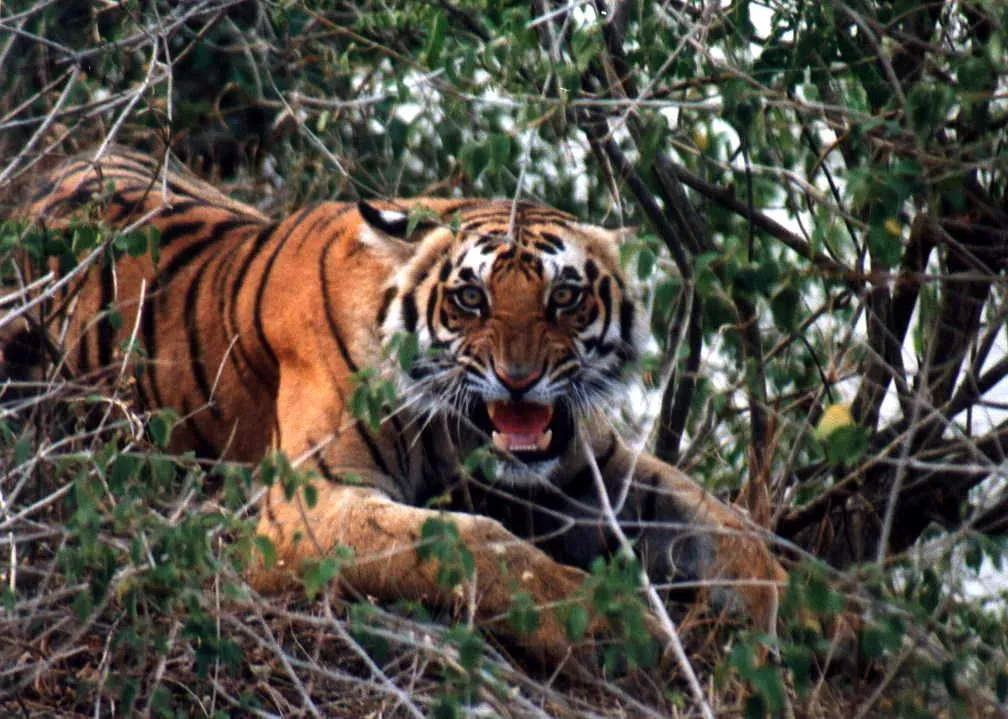

Back in 1996, I had the honour of participating in the Tiger and Elephant Census at Corbett National Park.
At the time, we had developed a close rapport with Mr. R.C. Gautam, the Director, and our love for the jungle, its life, and its silence drove us to ask, “Sir, please involve us. We would be privileged to serve the park.”
Under then-new norms, the forest department began involving NGOs and individuals in census work. That’s how I first entered the wild - not as a visitor, but as a contributor.
Tracking Without Technology
In those days, there were no camera traps or GPS collars. Everything depended on manual methods. The park was mapped into five-square-kilometre sectors, and teams monitored tiger movement using pugmarks and other signs.
Our assignment lay between Dhikala Camp and Choohapani. Leading us was Mr. H.S. Aswal, an experienced ornithologist who once guided Rajiv Gandhi through the forest’s bird life.
Reading the Forest Floor
The census ran between 5th and 12th May, when the summer heat drives animals to waterholes. We would visit these waterholes the evening before and smooth the sand so that fresh pugmarks would show clearly the next morning.
When fresh pugmarks appeared, that’s when our real work began.
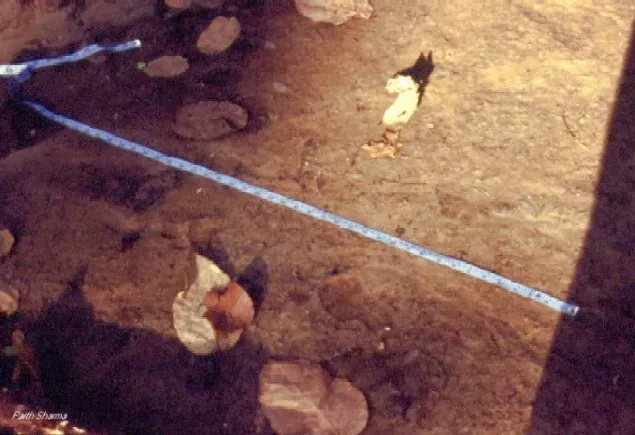
First, we measured the stride length - the distance between successive prints - to estimate the size of the animal.
Finally, we poured Plaster of Paris into the pugmark to create a cast - a three-dimensional record.

So we ended each site with three key pieces of evidence: the cast, the traced outline, and the stride measurement. Together, these formed the foundation of the Tiger Census report.
Life in the Field
Our field team comprised a forest officer, an assistant carrying supplies, and two to three NGO volunteers. We carefully recorded the location, time, direction of movement, stride, and pugmark shape, and made an assessment of whether the animal was male or female.
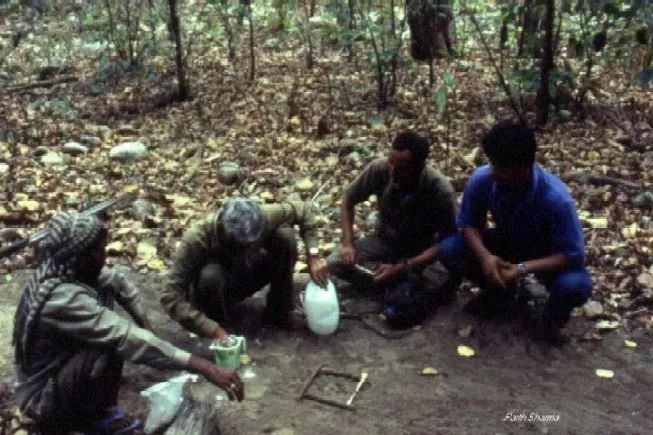
Every report was documented in detail and countersigned before being sent to the Director’s office for analysis and aggregation.
Numbers and the Wild
At the time, Corbett was believed to host somewhere between 170 and 180 tigers. Over the decades, thanks to sustained conservation efforts and community support, that number has grown significantly, with recent estimates placing the population at around 319 tigers in the reserve.
The Moment That Stayed
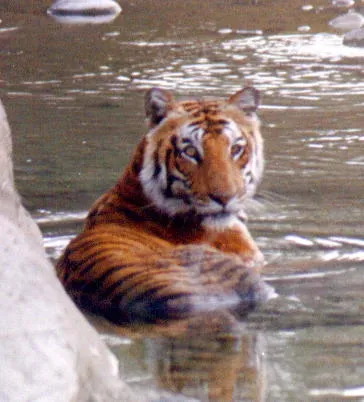
I’ll never forget that afternoon at a waterhole when a tiger appeared.
It saw us. We saw it.
Time seemed to stop.
And then, just as quietly, it turned and disappeared back into the forest.
That moment has stayed with me ever since - a reminder that even in the midst of careful science and structured observation, the forest always retains its mystery.